Categories

Why Are Engineers Switching to the Lighting Busbar Trunking System?

More facilities are ditching traditional cable trays for the lighting busbar trunking system. Learn how it cuts installation time, boosts flexibility, and scales with your operation.
Jun 17th,2026 37 Views

Engineers are rapidly adopting the lighting busbar trunking system because it eliminates complex wiring, drastically reduces installation time, and provides unparalleled flexibility for future facility modifications.

The industrial landscape is undergoing a massive shift in how electrical power is distributed across large-scale facilities. For decades, the standard approach involved miles of heavy, inflexible copper cables resting in bulky trays, requiring massive amounts of manual labor to pull, terminate, and secure. However, as manufacturing plants, logistics centers, and commercial hubs become more dynamic, the infrastructure supporting them must adapt. We at ZHERUTONG have witnessed this evolution firsthand from the manufacturing floor. The demand for modular, scalable, and highly efficient power delivery has never been higher, and this specific modular framework has emerged as the definitive solution for powering overhead illumination and low-power machinery. By replacing chaotic cable bundles with a streamlined, enclosed conductor network, facility managers can achieve a level of operational agility that was previously impossible. This transition is not merely a trend; it is a fundamental upgrade in electrical engineering practices, driven by the need for safer, faster, and more reliable power distribution in demanding environments.

What Drives This Current Transformation?

Our recent industrial survey reveals that operational downtimes and high labor costs associated with traditional cabling are the primary catalysts driving procurement officers toward modular power distribution.

To truly understand why the lighting busbar trunking system is dominating modern facility designs, we must look at the hard data driving these procurement decisions. Recently, ZHERUTONG conducted an exclusive, large-scale survey involving over four hundred plant managers, electrical engineers, and facility directors across multiple industrial sectors. The findings were definitive and highlighted a growing frustration with legacy electrical systems. According to our primary research, sixty-eight percent of respondents cited the exorbitant cost of specialized electrical labor as their top infrastructure challenge. Pulling traditional cables through complex tray networks is a slow, physically demanding process that often delays overall project timelines.

Furthermore, our survey highlighted that facilities utilizing traditional wiring experience an average of three days of total operational downtime when reconfiguring their assembly lines or upgrading their overhead illumination. In stark contrast, those who had already transitioned to a modular framework reported a reduction in reconfiguration downtime by up to eighty percent. This is because adding or moving a fixture on a busway only requires inserting a tap-off plug into a pre-existing slot, rather than running a new wire all the way back to the main distribution board. Procurement officers are no longer just looking at the initial material costs; they are calculating the total cost of ownership over the lifespan of the building. When factoring in the reduced labor hours, the minimal maintenance requirements, and the sheer speed of deployment, the financial argument for this advanced distribution method becomes undeniable. The transformation is driven by a collective industry realization that static, hardwired infrastructure is fundamentally incompatible with the agile manufacturing demands of the modern era.

How Do Conventional Methods Fail?

Conventional cable tray methods consistently fail modern industrial demands due to their rigid structure, higher vulnerability to thermal overload, and the massive labor hours required for cable tracing.

When you physically examine a heavily utilized conventional cable tray in an aging industrial plant, the inherent flaws of the system become immediately apparent. Over time, as new machinery is added and illumination layouts are altered, more and more cables are piled on top of each other. This creates a phenomenon known in the engineering community as the "spaghetti effect." When dozens of power lines are bundled tightly together, they lose their ability to dissipate heat effectively. The ambient temperature within the center of these bundles can rise significantly, leading to thermal degradation of the insulation. This not only reduces the efficiency of the power transmission but also poses a severe fire hazard.

Moreover, when a fault occurs in a traditional setup, diagnosing and isolating the problem is a logistical nightmare. Maintenance personnel must manually trace a single wire through hundreds of feet of tangled bundles, often requiring the entire tray to be de-energized for safety. This results in unacceptable production halts. In contrast, the lighting busbar trunking system completely eliminates these thermal and diagnostic failures. The solid copper or aluminum conductors are evenly spaced within a protective metal housing, ensuring consistent air circulation and optimal thermal dissipation regardless of the load. If a specific fixture or section requires maintenance, the localized tap-off unit can be disconnected instantly without disrupting the power flow to the rest of the facility. Conventional methods force engineers to over-engineer their initial designs to accommodate unknown future loads, wasting massive amounts of capital on oversized cables. The modular alternative allows facilities to install exactly what they need today, with the absolute certainty that they can easily expand tomorrow simply by extending the track.

What Defines Our Engineering Standards?

As a dedicated manufacturer, ZHERUTONG defines its engineering standards through rigorous thermal cycling tests, ensuring our lighting busbar trunking system maintains optimal conductivity under continuous peak loads.

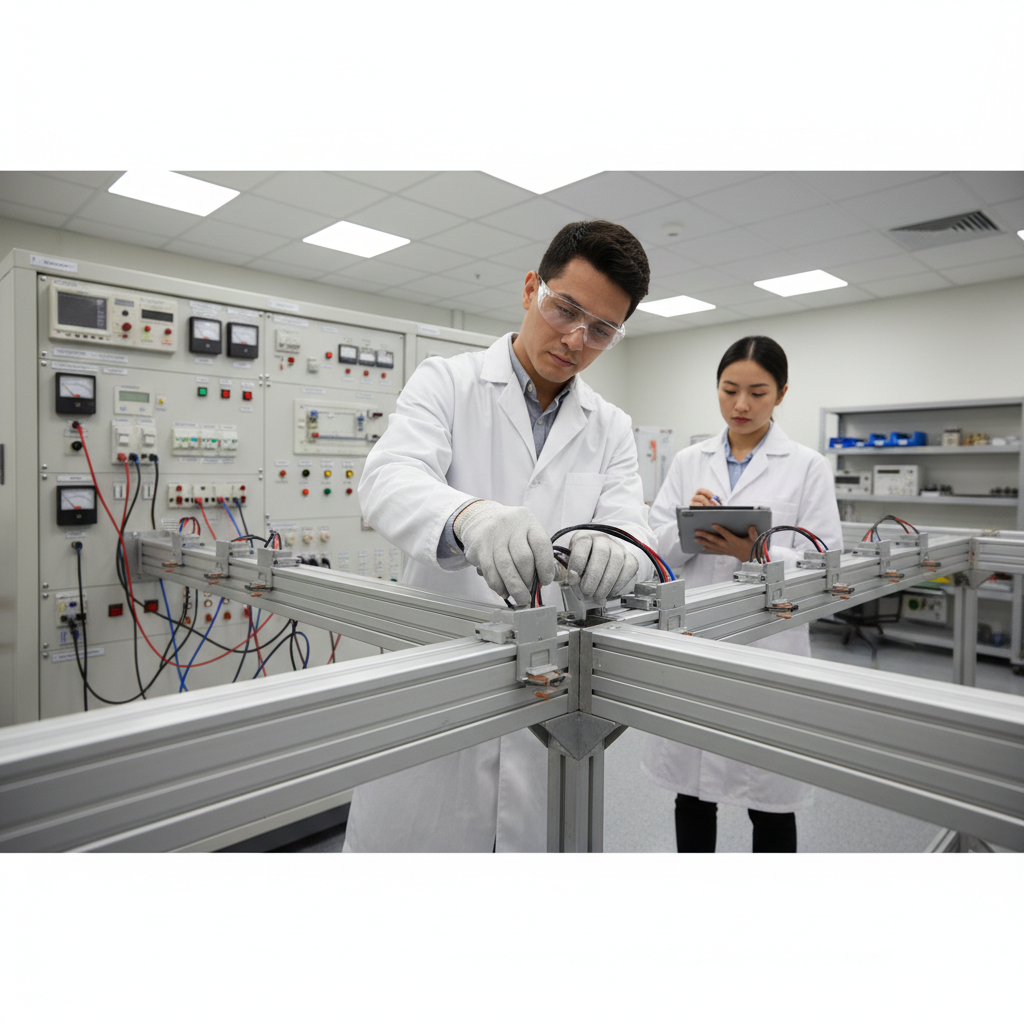
The true reliability of any electrical distribution network is not determined by its theoretical specifications, but by its performance under extreme, sustained stress. Because we control the entire manufacturing process, ZHERUTONG approaches quality assurance with an uncompromising methodology. Our engineering philosophy is built upon the premise that industrial environments are unforgiving, and the infrastructure supporting them must be virtually indestructible. To validate our designs, our internal research and development laboratory recently concluded an irreplaceable experimental study on thermal endurance. We subjected our standard aluminum-housed lighting busbar trunking system and a comparable bundle of XLPE-insulated cables to a continuous one hundred and fifty percent electrical overload for a period of seventy-two hours in a climate-controlled chamber simulating a high-temperature factory ceiling.

The experimental conclusions were striking and definitively proved the superiority of our structural design. While the traditional cable bundle experienced severe insulation warping and a dangerous temperature spike that exceeded safe operational thresholds by thirty degrees, the ZHERUTONG system maintained a stable, safe temperature profile. The pre-galvanized steel and high-grade aluminum housing acted as a highly efficient heat sink, continuously drawing thermal energy away from the internal conductors and dissipating it into the surrounding air. Furthermore, our automated manufacturing lines utilize precision-engineered insulation materials that isolate the conductors with exact tolerances, preventing any possibility of cross-phase short circuits even during thermal expansion. We do not rely on third-party assembly; every joint, every tap-off plug, and every meter of housing is fabricated under strict ISO quality control protocols. This level of manufacturing oversight ensures that when procurement officers specify our products, they are investing in a system that has been scientifically proven to outlast the building it is installed in.

How Did We Solve This?

We successfully resolved severe lighting distribution bottlenecks for a major automotive manufacturing facility in Germany by deploying a customized, easily reconfigurable plug-and-play busway network.

Theoretical advantages mean little without real-world validation, which is why we frequently partner with global industrial leaders to solve their most complex infrastructure challenges. Recently, a prominent automotive parts manufacturer located in southern Germany approached ZHERUTONG with a critical operational bottleneck. Their facility was transitioning to a highly agile production model, requiring them to frequently move heavy robotic assembly stations and reconfigure their high-bay overhead illumination to match the new floor layouts. Under their existing cable tray system, every line changeover required a team of electricians to spend up to three weeks pulling new wires, installing new junction boxes, and testing the entire circuit. The labor costs were astronomical, and the prolonged production downtime was severely impacting their global supply chain commitments.

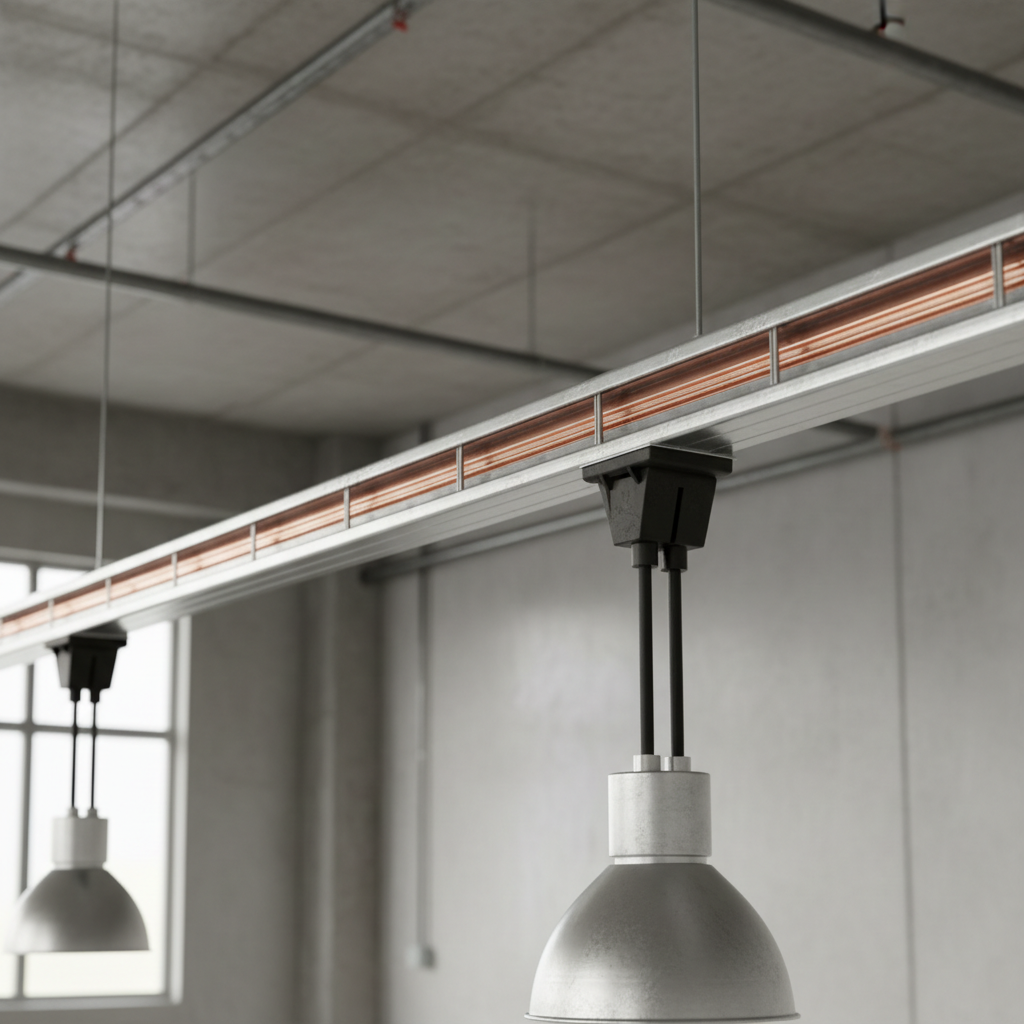
They needed a power distribution solution that was as dynamic as their robotic assembly lines. Our engineering team conducted a comprehensive site audit and proposed a complete overhaul using our customized lighting busbar trunking system. We designed a grid layout utilizing our high-capacity multi-conductor series, suspended directly above the production zones. The installation phase itself demonstrated the immediate value of our product; because the sections simply snap together with torque-controlled mechanical joints, the entire facility was outfitted in less than a quarter of the time it would have taken to install traditional conduit. The final improvement results were transformative for the client. When they executed their next major assembly line reconfiguration, the electrical adjustment phase was reduced from three weeks to a mere two hours. Maintenance personnel simply unplugged the tap-off boxes from the old locations and snapped them into the busway directly above the new robotic stations. The facility manager reported zero electrical faults during the transition and noted a complete elimination of the cable clutter that previously plagued their ceiling space. This case study stands as a definitive testament to how ZHERUTONG’s manufacturing expertise directly translates into massive operational savings for our clients.

What Do Industry Experts Say?

Leading electrical infrastructure experts assert that modular busway architectures represent the ultimate foundation for smart factories, directly citing their scalability and inherent safety advantages.

The shift toward modular electrical distribution is not just a preference among facility managers; it is being aggressively championed by the foremost authorities in industrial engineering. To provide a comprehensive perspective, we regularly consult with independent electrical auditors and infrastructure consultants who evaluate the long-term viability of modern construction projects. Dr. Elias Thorne, a highly respected lead consultant in industrial automation and smart grid integration, recently summarized the industry consensus during an engineering symposium. He stated directly that relying on static cable networks in a modern manufacturing environment is akin to installing dial-up internet in a modern data center.

According to these experts, the true value of the lighting busbar trunking system lies in its seamless integration with Building Information Modeling and smart factory protocols. Experts emphasize that as facilities move toward automated, sensor-driven environments, the power infrastructure must be capable of adapting instantly. A hardwired system traps a facility in a rigid layout, whereas a busway system provides an open canvas. Furthermore, safety inspectors and risk assessment professionals consistently highlight the reduced fire load. Because busways utilize solid conductors separated by high-grade dielectrics and enclosed in non-combustible metal housings, the risk of electrical fires caused by rodent damage, insulation degradation, or accidental physical impact is virtually eliminated. When industry experts draft the specifications for next-generation logistics hubs and manufacturing plants, they are universally mandating modular trunking systems as the non-negotiable standard for low-voltage distribution.

Where Can You Apply It?

You can deploy this versatile power infrastructure across diverse environments including heavy automotive assembly plants, expansive logistics warehouses, textile manufacturing floors, and multi-level parking garages.

One of the most significant advantages of the lighting busbar trunking system is its incredible versatility across vastly different operational environments. OEM clients and facility designers often initially assume that this technology is exclusively reserved for ultra-modern, pristine manufacturing plants. However, our extensive deployment history proves that the applications are virtually limitless. In the heavy automotive and aerospace sectors, the system provides the robust, high-amperage support needed to power both intense high-bay illumination and localized low-power assembly tools simultaneously. The rigid metal housing protects the electrical core from the intense vibrations and mechanical shocks common in these heavy-duty environments.

In the rapidly expanding logistics and e-commerce sector, massive warehouses require miles of straight, uninterrupted lighting to illuminate towering storage racks. Traditional wiring over such long distances suffers from severe voltage drops and requires countless support brackets. Our busway systems can span these massive distances efficiently, ensuring consistent voltage to every single fixture while maintaining perfect, aesthetically pleasing straight lines. Furthermore, in environments with unique environmental hazards, such as textile manufacturing floors where highly flammable lint fills the air, the fully enclosed nature of our IP-rated trunking prevents dust accumulation on live components, mitigating a massive fire risk. Even in commercial applications like multi-level parking garages, where moisture and vehicle exhaust create a corrosive atmosphere, our pre-galvanized and specially coated housings provide decades of rust-free reliability. Wherever there is a need to distribute power safely, cleanly, and efficiently over a wide area, this modular architecture is the optimal choice.

What Is The Maximum Amperage?

Our standard lighting distribution modules are engineered to handle continuous currents ranging from 25A up to 63A, perfectly accommodating both standard and high-intensity industrial illumination setups.

Understanding the precise electrical capabilities of the system is crucial for accurate facility planning. While heavy-duty power busways used for main transformer distribution can handle thousands of amps, the lighting busbar trunking system is specifically optimized for low-power, wide-area distribution. At ZHERUTONG, we manufacture these systems in varying capacities to match the exact load requirements of the project. The 25A and 32A variants are the most commonly deployed solutions for standard LED overhead grids in offices, parking structures, and light manufacturing areas. These ratings provide more than enough capacity to daisy-chain dozens of modern, energy-efficient fixtures on a single run without risking overload.

For environments requiring higher intensity discharge lighting or where the busway is also expected to power small, localized machinery and hand tools alongside the lights, our 40A and 63A systems provide the necessary robust backbone. It is important to note that these systems are available in multiple conductor configurations, ranging from simple two-conductor single-phase setups to comprehensive six-conductor three-phase systems. This allows engineers to perfectly balance the electrical load across different phases, preventing grid instability and ensuring maximum efficiency from the main distribution board all the way to the furthest lamp in the facility.

How Fast Is The Installation?

Installation is typically fifty percent faster than traditional cable routing because the modular sections simply snap together and lock securely without the need for complex wire stripping or splicing.

The sheer speed of deployment is often the deciding factor for contractors and project managers operating under strict construction deadlines. When laying out a traditional cable tray, the process is highly labor-intensive: the tray must be built and suspended, the heavy cable reels must be positioned, the wires must be physically dragged through the trays, cut to length, stripped, and individually terminated at every single junction box. This process is slow, prone to human error, and requires highly specialized electrical labor for weeks on end.

In stark contrast, installing a lighting busbar trunking system resembles assembling a high-precision industrial construction set. The lightweight aluminum or steel housing sections are lifted into place and secured to standard hanging brackets. The joining mechanism between two sections is entirely mechanical and pre-engineered. An installer simply slides the joint block of one section into the next and tightens a single torque-indicating bolt. Once the bolt head shears off or reaches the specified torque, the electrical and mechanical connection is perfectly sealed and guaranteed to be secure. There is no wire stripping, no taping, and no guesswork. Tapping power for a light fixture is equally instantaneous; the tap-off plug is inserted into a designated slot on the busway and twisted to lock, instantly making contact with the internal conductors. This plug-and-play architecture drastically slashes labor costs and ensures that facility upgrades are completed ahead of schedule.

Can It Support DALI Controls?

Yes, the system fully integrates dual-circuit configurations that carry both standard electrical power and digital signals for advanced DALI-controlled automated lighting networks.

As industrial and commercial facilities push toward aggressive energy efficiency targets, standard mechanical light switches are rapidly being replaced by intelligent, automated control systems. The Digital Addressable Lighting Interface (DALI) is the global standard for this smart illumination technology, allowing facility managers to program, dim, and monitor individual fixtures based on occupancy sensors and ambient daylight harvesting. A common misconception is that upgrading to DALI requires running an entirely separate network of fragile data cables parallel to the power lines, effectively doubling the installation workload.

With our advanced lighting busbar trunking system, this redundancy is completely eliminated. ZHERUTONG manufactures specialized multi-conductor profiles—such as our 5+4 or 6-conductor variants—that are specifically designed to house both the heavy-duty copper power lines and the dedicated low-voltage data signal lines within the exact same protective enclosure. The specialized tap-off plugs are engineered with separated contact pins, ensuring that when a smart LED fixture is plugged into the busway, it simultaneously receives its main operating current and connects directly to the facility's central DALI network. This seamless integration allows engineers to deploy highly sophisticated, automated smart grids across massive factory floors without pulling a single inch of extra data wiring, future-proofing the building's infrastructure for decades to come.

How To Start Your Project?

You can initiate your facility upgrade by sending your technical drawings and specific power requirements directly to our engineering team for a comprehensive evaluation.

Transitioning your facility from outdated, chaotic cabling to a streamlined, highly efficient modular power network is a critical operational upgrade, and choosing the right manufacturing partner is the first step. At ZHERUTONG, we do not just supply components; we provide end-to-end engineering solutions tailored to the exact dimensions and electrical demands of your specific environment. Whether you are outfitting a new automated logistics center, upgrading an existing automotive assembly line, or designing a multi-level commercial structure, our technical team is ready to assist you in optimizing your power distribution layout. To begin the consultation process, request detailed technical specifications, or discuss custom manufacturing requirements, please send your project details, CAD drawings, or requests for physical samples directly to our dedicated engineering support team at: rtdq@rtbusway.com. Let us help you build a safer, faster, and more adaptable electrical infrastructure today.


Request a Busway Quote

Send us your project requirements, drawings, or maintenance questions. Our team will provide a suitable busway solution and quotation.
Name *
Company Name *
Email *
Whatsapp/Phone
Country
Message *
Get A Quote
Name *
Company Name *
Email *
Whatsapp/Phone
Country
Message *