Categories

How To Select Bus Duct Tap Box Size For Your Industrial Load?

Wrong sizing causes failures. Learn how to select bus duct tap box size for industrial load by evaluating current draw, inrush demands, and short-circuit ratings.
May 29th,2026 26 Views

Selecting the correct bus duct tap box size for an industrial load requires a precise evaluation of continuous current draw, peak inrush demands, and short-circuit withstand capabilities based on real-world factory data.

Understanding how to select bus duct tap box size for industrial load is a critical competency for electrical engineers and procurement officers tasked with designing resilient power distribution networks. At ZHERUTONG, our daily interactions with complex single-line diagrams and facility blueprints have shown us that relying solely on theoretical catalog specifications often leads to systemic failures. The reality of a manufacturing environment involves unpredictable variables, from the ambient heat of a foundry floor to the severe harmonic distortion generated by modern variable frequency drives. A bus duct tap box acts as the vital gateway between the main power artery and your critical machinery. If this gateway is improperly sized, the entire production line is vulnerable to thermal degradation, nuisance tripping, and catastrophic arc flash incidents. Our engineering team approaches sizing not just as a mathematical exercise, but as a holistic infrastructure strategy. We analyze the specific operational profile of your machinery, the physical constraints of your facility, and your long-term expansion goals to manufacture a power drop solution that guarantees absolute stability.

What Dictates Tap Box Sizing Exactly?

Tap box sizing is dictated primarily by the continuous current draw of your industrial equipment, peak inrush currents, and the facility's short-circuit withstand requirements. Matching these electrical parameters ensures safe and uninterrupted power distribution.

When engineers begin the process of sizing a bus duct tap box, the foundational step is establishing the true electrical baseline of the intended application. At ZHERUTONG, we frequently review client single-line diagrams where the initial sizing was calculated using only the steady-state nominal amperage of the equipment. This is a fundamental engineering oversight. The continuous current draw is merely the starting point. A robust sizing calculation must account for the maximum concurrent load of all devices fed by that specific tap box, incorporating a safety margin mandated by local electrical codes. Furthermore, the physical construction of the tap box, including the cross-sectional area of its internal copper or aluminum conductors, the dimension of the grounding lugs, and the thermal capacity of the circuit breaker frame, must be engineered to handle the continuous electrical load without exceeding safe operating temperatures. Our manufacturing perspective is grounded in actual factory floor data; we know that a tap box rated for four hundred amperes in a temperature-controlled laboratory will perform very differently when subjected to the harsh realities of a heavy industrial plant. Therefore, we design our enclosures and internal components to maintain operational integrity under sustained heavy loads, ensuring that the power distribution remains an invisible, flawless utility rather than a constant maintenance burden.

How Does Load Fluctuation Alter Amperage?

Heavy machinery generates significant load fluctuations that force engineers to size the tap box for peak transient currents rather than just baseline operational amperage. Failing to account for these spikes leads to premature breaker tripping and bus duct overheating.

Industrial environments are characterized by highly dynamic electrical loads. When a large induction motor starts, it draws a locked rotor amperage that can be six to eight times higher than its full load amperage. These massive load fluctuations place immense thermal and mechanical stress on the bus duct tap box. If the tap box and its internal overcurrent protection devices are sized only for the steady-state operational amperage, these transient spikes will cause the breaker to trip prematurely, halting production. Moreover, the repetitive thermal cycling caused by these inrush currents can degrade the insulation and loosen the mechanical connections within the tap box over time. The integration of variable frequency drives adds another layer of complexity, as they introduce non-linear loads and harmonic currents that can cause the internal conductors to heat up significantly more than standard sinusoidal currents would predict. Industry standards often require applying specific percentage multipliers to account for these motor inrush currents. For example, when feeding a heavy conveyor system or a large industrial compressor, we typically advise engineers to apply a multiplier of at least one hundred and twenty-five percent to the continuous load, plus the full inrush profile of the largest single motor on that circuit, to determine the true required capacity of the tap box.

What Role Does Fault Current Play?

Fault current determines the necessary short-circuit rating of your tap box, dictating how much explosive electrical energy the enclosure and internal lugs can withstand during a failure. We always engineer our boxes to exceed the facility's maximum calculated fault current.

While continuous amperage dictates the day-to-day operational capacity, the short-circuit withstand rating is the ultimate safety net for industrial personnel and infrastructure. In the event of a catastrophic electrical failure, such as a dead short across the phases, the amount of fault current that rushes through the system is limited only by the impedance of the upstream transformer and the intervening conductors. This fault current can reach tens of thousands of amperes in a fraction of a second, generating immense magnetic forces and explosive thermal energy. If a bus duct tap box is undersized in its short-circuit rating, the internal components can physically violently rupture, turning the enclosure into shrapnel and creating a deadly arc flash hazard. Understanding the difference between continuous load capacity and fault current capacity is non-negotiable. At ZHERUTONG, we mandate that the short-circuit rating of the tap box must be equal to or greater than the maximum available fault current at the point of installation. We achieve this by manufacturing our enclosures with heavy-gauge steel, reinforcing the internal phase isolation barriers, and utilizing high-torque bracing systems for the internal bus bars, ensuring that the unit remains intact and safely clears the fault even under the most extreme electrical stress.

Which Tap Box Type Fits Better?

Choosing the right type depends entirely on whether your facility requires frequent layout changes or permanent, high-amperage power feeds. A plug-in unit offers modular mobility, while a cable tap box provides a robust, fixed connection for heavy stationary loads.

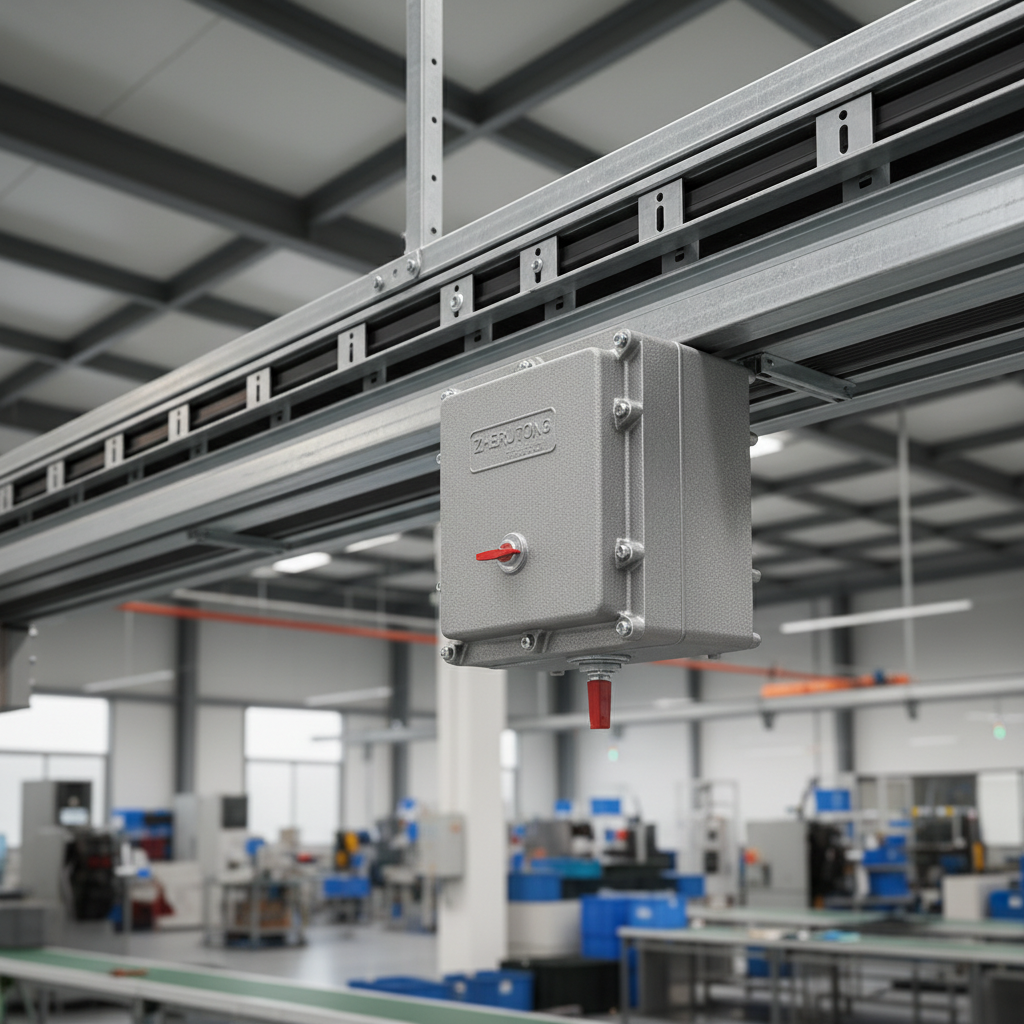
Once the electrical sizing parameters are firmly established, the engineering focus must shift to the physical form factor and the specific application environment. The physical layout of the facility, the routing of the overhead power infrastructure, and the anticipated frequency of machinery relocation all play critical roles in determining the optimal tap box configuration. Engineers must evaluate the spatial constraints around the busway run, ensuring adequate clearance for maintenance personnel to safely operate the disconnect handles and access the internal wiring compartments. At ZHERUTONG, we manufacture a comprehensive portfolio of both plug-in and cable-fed units because we understand that no two industrial facilities operate identically. A dynamic automotive assembly line demands a completely different power drop strategy than a static wastewater treatment pumping station. Making the correct choice between these two primary types not only affects the initial capital expenditure and installation timeline but also dictates the long-term agility and maintenance overhead of the plant's entire electrical distribution network.

How Does A Plug-In Box Operate?

A plug-in box connects directly into the designated ports along the bus duct run, utilizing mechanical stabs to draw power without requiring complex hardwiring. This design allows maintenance teams to add or relocate power drops in minutes.

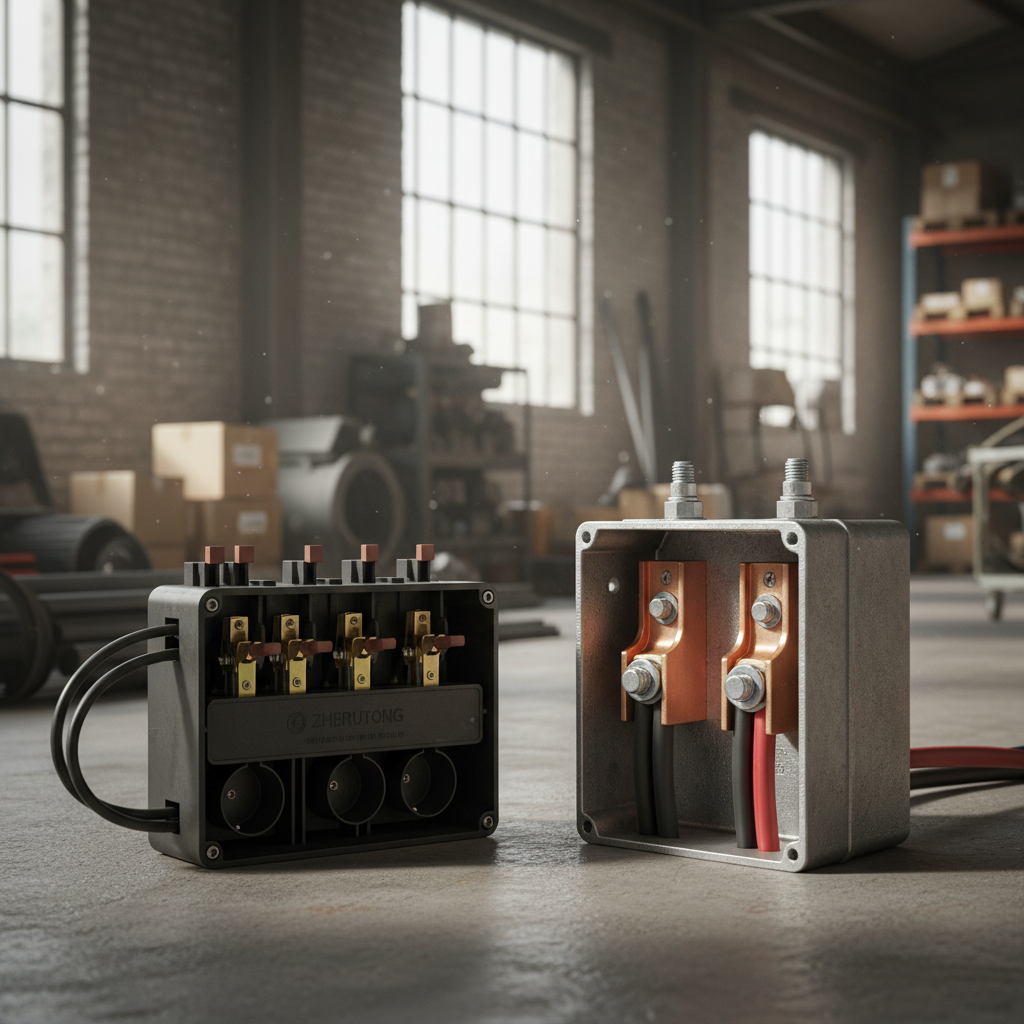
The engineering brilliance of a plug-in tap box lies in its modularity and speed of deployment. The internal mechanism features highly engineered mechanical stabs, typically constructed from silver-plated copper, which are designed to slide precisely into the pre-configured access ports distributed along the length of the busway. As the unit is seated into the port, these stabs make a high-pressure, low-resistance contact with the internal live bus bars. Safety is paramount in this design; ZHERUTONG plug-in units incorporate advanced grounding clips that make contact with the busway housing before the phase stabs engage the live power, ensuring the enclosure is safely grounded throughout the installation process. Additionally, mechanical interlocks prevent the access door from being opened while the switch is in the energized position, and prevent the unit from being installed or removed while under load. This type of tap box is the absolute best use case for facilities like CNC machining centers, robotic welding cells, or packaging lines where equipment is frequently upgraded, repositioned, or scaled up to meet changing production demands.

When Are Cable Tap Boxes Required?

Cable tap boxes are mandatory when feeding power from a conduit system into the ends or center of a busway run, or when supplying massive, unmoving industrial loads like large transformers. They serve as the critical transition point between traditional cabling and solid bus bars.

Unlike their plug-in counterparts, cable tap boxes are designed for permanence and massive power transfer. They are typically deployed in end-feed or center-feed configurations, acting as the primary injection point where the heavy parallel cable runs from the main switchgear transition into the solid copper or aluminum conductors of the bus duct system. These units do not utilize plug-in stabs; instead, they are bolted directly to the flanged ends or joint sections of the busway. Because they are often tasked with carrying the entire amperage of the bus duct run, cable tap boxes are manufactured with exceptionally heavy-duty lug configurations capable of accepting multiple large MCM cables per phase. The internal volume of these boxes is significantly larger to accommodate the massive bending radius required for these thick, rigid industrial cables. They are the required solution when supplying power to unmoving, high-capacity industrial loads such as central chilling units, large induction furnaces, or step-down transformers where mobility is entirely unnecessary and absolute connection solidity is the primary engineering goal.

What Is The Installation Difference Exactly?

The core bus duct plug-in tap box vs cable tap box installation difference lies in the mounting mechanism; plug-in units simply snap into pre-engineered busway slots with minimal tools, whereas cable tap boxes require heavy lifting equipment, bolted flange connections, and extensive wire termination work.

Understanding the bus duct plug-in tap box vs cable tap box installation difference is crucial for accurately estimating project timelines and labor costs. Based on ZHERUTONG's extensive field data, a standard plug-in unit can typically be installed by a single trained technician in under thirty minutes. The process requires minimal tooling: the technician opens the busway port, aligns the tap box stabs, pushes the unit into place until the mounting clamps engage, and tightens a few securing bolts. The facility experiences almost zero downtime, as many plug-in systems are designed to be safely installed while the main busway remains energized. Conversely, the installation of a cable tap box is a major infrastructure event. It usually requires a team of electricians, mechanical lifting equipment to hoist the heavy steel enclosure into position, and several hours of labor. The busway must be completely de-energized. The team must carefully align the bolted flange connections, use precision torque wrenches to secure the joint hardware to exact specifications, and then spend hours stripping, terminating, and torquing the heavy MCM cables into the internal lugs. This fundamental bus duct plug-in tap box vs cable tap box installation difference means that engineers must carefully weigh the upfront labor costs against the long-term flexibility requirements of the facility.

How Did We Resolve Sizing Failures?

We resolved a critical sizing failure for a heavy machinery plant by upgrading their undersized standard tap boxes to custom-engineered, thermally rated units capable of handling heavy robotic welding loads. This intervention eliminated their weekly power outages and stabilized their production line.

Theoretical sizing calculations frequently fall apart when subjected to the brutal realities of a heavy industrial environment. At ZHERUTONG, we are often called upon to troubleshoot and resolve catastrophic power distribution failures caused by poor initial sizing choices from previous suppliers. A common scenario involves an OEM client or facility manager who purchased generic, off-the-shelf tap boxes based solely on the baseline amperage of their machinery, completely ignoring the environmental and operational nuances of their specific plant. These generic units quickly succumb to thermal stress, leading to a cascading series of failures that paralyze production. Our approach as a direct manufacturer is not just to replace a broken part, but to conduct a deep-dive forensic engineering analysis to understand exactly why the failure occurred. By leveraging our manufacturing capabilities, we design and fabricate custom solutions that directly address the root cause of the electrical stress, transforming a failing infrastructure into a highly reliable power network.

What Was The German Plant Facing?

A heavy machinery manufacturing plant in Germany was experiencing severe overheating and frequent thermal trips because their generic tap boxes were not sized for the continuous harmonic loads of their new CNC centers. Their procurement officers urgently needed a manufacturer who could diagnose and replace the failing infrastructure.

The client, a prominent manufacturer of heavy mining equipment in Germany, had recently modernized their facility by installing a fleet of advanced multi-axis CNC machining centers. Shortly after the upgrade, they began experiencing severe symptoms of electrical distress. The tap boxes feeding the new production line were running dangerously hot, emitting the distinct odor of burning insulation. The internal circuit breakers were experiencing nuisance thermal trips multiple times a week, causing sudden production halts that ruined expensive raw materials and severely damaged their delivery schedules. The original supplier had provided standard commercial-grade tap boxes sized strictly for the nominal continuous current of the CNC machines. However, they failed to account for the actual industrial environment. The CNC machines, heavily reliant on variable frequency drives and servo motors, were generating massive amounts of non-linear harmonic distortion. These high-frequency harmonics caused a severe skin effect within the standard conductors, drastically increasing the electrical resistance and generating heat that the generic enclosures were simply not designed to dissipate.

How Did ZHERUTONG Optimize The Specs?

ZHERUTONG conducted a full load profile analysis and manufactured custom eight-hundred ampere tap boxes with oversized copper lugs and enhanced ventilation, specifically tailored to their harmonic profile. After installation, the operating temperature of the connection points dropped by thirty percent, proving the efficacy of our engineering.

When the client's engineering team contacted ZHERUTONG, we immediately requested their updated single-line diagrams and the specific harmonic profiles of their new CNC equipment. Our engineers conducted a comprehensive thermal imaging review and load calculation. We determined that simply replacing the burned-out boxes with higher-amperage generic units would not solve the harmonic heating issue. Instead, we manufactured custom eight-hundred ampere tap boxes designed specifically for high-harmonic environments. We utilized oversized, high-purity copper bus bars with a larger surface area to mitigate the high-frequency skin effect. We upgraded the internal lugs to heavy-duty compression fittings to ensure flawless contact under severe thermal cycling. Furthermore, we redesigned the enclosure itself with enhanced, filtered ventilation louvers to drastically improve ambient heat dissipation while maintaining the required ingress protection rating against factory dust. Upon installing the ZHERUTONG custom units, the results were immediate and measurable. The facility experienced zero subsequent downtime from thermal tripping, and thermal imaging confirmed that the operating temperature of the connection points had dropped by over thirty percent, stabilizing their entire German production line and proving the critical value of manufacturer-level engineering expertise.

Why Do Industrial Sizing Mistakes Occur?

Industrial sizing mistakes typically occur because engineers rely on theoretical baseline data instead of measuring actual physical environmental constraints and peak operational loads. As experienced manufacturers, we see that ignoring ambient factory temperatures is the leading cause of premature equipment degradation.

The gap between a software-generated electrical model and the physical reality of a factory floor is where the majority of industrial sizing mistakes are born. Engineers utilizing standard design software often input the nameplate data of the machinery and allow the program to output a minimum required tap box size based on basic electrical codes. However, these codes represent the absolute minimum safety threshold, not the standard for optimal, long-term industrial reliability. At ZHERUTONG, our unique vantage point as a manufacturer reveals that many sizing failures stem from a lack of holistic environmental awareness. Factors such as the physical location of the busway near ceiling-mounted radiant heaters, the accumulation of insulating industrial dust on the tap box enclosure, and the continuous 24/7 duty cycles of modern manufacturing are frequently omitted from the initial calculations. When procurement officers prioritize the lowest initial capital cost over engineered reliability, they inevitably select undersized, standard-rated equipment that is fundamentally incapable of surviving the harsh, unforgiving ecosystem of an industrial plant.

Are Thermal Derating Factors Frequently Ignored?

Yes, thermal derating factors are consistently overlooked, causing engineers to install standard-rated boxes in high-temperature zones like foundries or chemical plants. When ambient heat exceeds forty degrees Celsius, a tap box must be oversized to compensate for the reduced cooling capacity.

The physics of heat dissipation within an enclosed electrical device dictate that its current-carrying capacity is intrinsically linked to the temperature of the surrounding air. A bus duct tap box relies on the ambient air to absorb and carry away the heat generated by the electrical resistance of its internal components. When a facility, such as a steel foundry, a glass manufacturing plant, or a chemical processing facility, operates with ambient temperatures consistently exceeding the standard baseline of forty degrees Celsius, the cooling capacity of the air is severely diminished. If thermal derating factors are ignored, a tap box rated for six hundred amperes at standard room temperature might effectively only be capable of safely carrying four hundred and fifty amperes in that high-heat environment. Operating it at its nominal rating will cause the internal insulation to rapidly degrade, leading to a catastrophic phase-to-phase short. ZHERUTONG's proprietary engineering rule-of-thumb mandates that for high-heat industrial environments, the tap box must be proactively oversized, applying strict derating curves to the internal breakers and conductor cross-sections to ensure the equipment operates well within its thermal limits regardless of the external factory conditions.

How Does Expansion Affect Initial Sizing?

Future facility expansion drastically affects initial sizing because installing a tap box with zero headroom means the entire bus duct node must be replaced when new machines are added. We always advise original equipment manufacturer clients to specify boxes with at least a twenty percent capacity buffer for upcoming production lines.

Industrial facilities are rarely static; they grow, evolve, and upgrade their machinery to meet market demands. One of the most costly sizing mistakes an engineer can make is designing a power distribution node with zero capacity headroom. If a tap box is sized exactly to the current load requirement, adding even a single new piece of auxiliary equipment in the future will overload the circuit. This necessitates a highly disruptive and expensive retrofit process, requiring the facility to shut down the busway, remove the existing tap box, and install a larger unit. The cost of this future downtime and labor vastly outweighs the marginal initial cost of oversizing the equipment during the original build. At ZHERUTONG, we conduct a cost-benefit analysis with our clients, strongly advocating for a forward-looking sizing strategy. We design our tap boxes with inherent modularity, allowing for future breaker upgrades within the same enclosure footprint, and we consistently advise incorporating a twenty to thirty percent capacity buffer. This strategic oversizing ensures that as your production lines expand, your power distribution infrastructure is already prepared to handle the increased load without requiring a total system overhaul.

How To Initiate Your Next Project?

Initiating your custom bus duct tap box project requires sending your facility's single-line diagrams, load calculations, and environmental specs to our engineering team for a comprehensive review. ZHERUTONG will then provide a precise sizing recommendation and manufacturing timeline tailored to your exact needs.

Getting the sizing right the first time is the most critical investment you can make in your facility's electrical reliability. Navigating the complexities of continuous loads, harmonic distortion, fault currents, and thermal derating requires more than just a catalog; it requires the deep, practical expertise of a dedicated manufacturer. ZHERUTONG stands ready to bridge the gap between theoretical electrical design and rugged industrial reality. We possess the engineering acumen and the direct manufacturing capabilities to solve your most complex power distribution sizing challenges, ensuring your machinery operates safely and continuously under the most demanding conditions. We invite engineers, procurement officers, and OEM clients to leverage our expertise. To initiate a comprehensive review of your project requirements, request detailed technical drawings, inquire about obtaining physical samples, or submit custom manufacturing requests, please send your project details via email to: rtdq@rtbusway.com.

Request a Busway Quote

Send us your project requirements, drawings, or maintenance questions. Our team will provide a suitable busway solution and quotation.
Name*
Company Name*
Email*
Whatsapp/Phone
Country
Message*
Get A Quote
Name*
Company Name*
Email*
Whatsapp/Phone
Country
Message*