Categories

Expert Guide: How To Size Electrical Busbar System For Industrial Panel

Learn how to size electrical busbar system for industrial panel with expert steps—covering load current, derating factors, short-circuit withstand, and cost optimization.
May 20th,2026 6 Views

Engineers often struggle with overheating inside tight industrial enclosures. Selecting the wrong cross-sectional area causes major manufacturing headaches. Failing temperature rise tests due to inaccurate calculations is common. We are ZHERUTONG, a professional busway manufacturer. We share practical manufacturing knowledge to solve these exact engineering issues. Sizing an electrical busbar system requires calculating continuous load current.

You must apply environmental derating factors accurately. You must verify short-circuit withstand capabilities thoroughly. Following this step-by-step tutorial helps you avoid costly redesigns. You will ensure safety compliance immediately. You will optimize your raw material costs effectively. Panel builders face strict deadlines daily. A failed inspection delays entire industrial projects. Our engineering team sees these mistakes frequently. We want to empower you with correct data. You can design safer panels using our methods. Master this process to elevate your engineering skills. Reliable power distribution starts with accurate mathematics.

Why Does Correct Busbar Sizing Matter?

Correct sizing prevents catastrophic thermal failures and ensures long-term operational stability in demanding industrial environments.

Undersized bars degrade insulation materials rapidly. Heat buildup causes fatal structural damage. Fires destroy entire industrial facilities quickly. Oversized bars waste your valuable project budget. Excess material wastes critical panel space. You must choose an electrical busbar system carefully. Strategic material choice dictates your project success. Accurate calculation prevents unplanned operational downtime. Evaluate materials based on the actual installation environment. Typical temperature thresholds must not exceed 105 degrees Celsius. Exceeding this limit melts insulation instantly. Operational failure statistics show poor sizing causes most fires. We see this constantly in our manufacturing experience. Proper sizing protects your entire electrical infrastructure.

Every millimeter of metal counts in tight spaces. You cannot afford to guess these dimensions. A precise approach saves money and saves lives. Engineers must respect the laws of physics. Current flow generates unavoidable heat continuously. Your panel acts like an oven without proper sizing. We manufacture systems designed to breathe properly. Heat dissipation is your primary engineering goal. A well-sized system runs cool under heavy loads. It extends the lifespan of connected breakers. It reduces maintenance costs for the end user.

How To Choose Copper Or Aluminum?

Choosing between materials depends on specific space constraints, budget limitations, and target current ratings entirely.

You need a copper vs aluminum busbar system current carrying capacity comparison. Aluminum has roughly 62 percent the conductivity of copper. This means aluminum requires a larger cross-sectional area. Larger areas take up more physical panel space. Copper handles higher current densities easily. Copper fits better inside tight industrial enclosures. Aluminum saves significant weight and material costs. Panel builders should choose copper for compact switchgear. Choose aluminum when budget is tight and space allows. We recommend analyzing your specific enclosure dimensions first. A proper copper vs aluminum busbar system current carrying capacity comparison reveals thermal differences. Copper dissipates heat slightly faster in confined spaces. Aluminum requires special surface treatments to prevent oxidation. We evaluate these factors before manufacturing your electrical busbar system.

Contact resistance is lower with pure copper joints. Aluminum joints require specialized anti-oxidation compounds. You must torque aluminum connections more carefully. We supply both materials based on client specifications. Weight is a massive factor for large panels. Aluminum reduces the total panel weight dramatically. This makes installation much easier for field technicians. Copper provides superior mechanical strength under stress. Copper resists bending during severe short circuits. You must balance cost against physical performance. Your choice dictates the entire panel layout.

How To Size Your Busbar Properly?

To size your system accurately, you must calculate operational current, adjust for environments, and verify limits.

Complex variables cause sizing confusion constantly. Multiple environmental factors impact performance daily. Electrical factors change under different production loads. A standardized step-by-step formula solves this completely. Always use a rigid checklist during engineering design. Learning how to size electrical busbar system for industrial panel prevents critical errors. We guide engineers through this process daily. A reliable electrical busbar system demands exact mathematical precision. Guesswork leads directly to failed local safety inspections. You must follow a rigid calculation methodology.

We mandate these exact steps in our manufacturing facility. Following our guide ensures your panel passes all tests. Ignorance of these rules causes catastrophic equipment failure. We engineered this guide to be highly actionable. You can apply these steps to any project immediately. Industrial panels operate in unpredictable environments. Dust and humidity alter thermal dynamics significantly. You must account for worst-case scenarios always. Our sizing methodology protects against unexpected load spikes. We build safety margins into every calculation step. This guarantees long-term reliability for your clients.


What Are The Core Calculation Steps?

The calculation strictly follows determining base ampacity, applying derating factors, and selecting optimal cross-sectional areas.

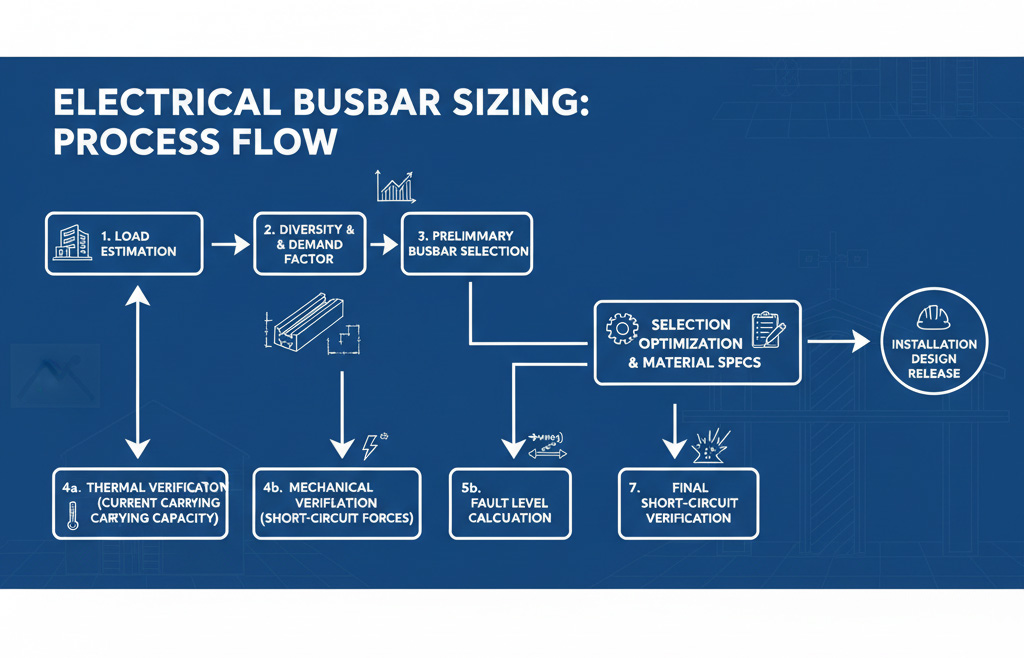
Step 1: Determine Maximum Continuous Current. Look directly at your main load schedule. Identify the total connected load in amperes. Add a 20 percent safety margin for future expansion.

Step 2: Apply Derating Factors. You must adjust for environmental realities. Use factor K1 for ambient temperature differences. A 45 degree Celsius ambient requires a different K1. Use factor K2 for high altitude installations. Altitudes over 1000 meters reduce cooling efficiency significantly. Use factor K3 for mounting arrangement orientations. Vertical mounting dissipates heat differently than horizontal mounting.

Step 3: Select Cross-Sectional Area. Use standard manufacturer ampacity tables. Match your derated current to physical dimensions. A 30 by 10 millimeter bar carries specific current. Consider a specific calculation example clearly. Imagine a 1200 ampere load in a 50 degree environment. You must apply a 0.82 derating factor here. Your required capacity jumps to 1463 amperes immediately. Select a bar size rated for 1500 amperes minimum.

Step 4: Verify skin effect and proximity effect. Alternating current pushes electrons to the conductor surface. This reduces the effective conductive area significantly. Wide and thin bars perform better than square bars. We recommend a thickness of 10 millimeters generally. Parallel bars require proper spacing for air flow. Keep a gap equal to bar thickness between them. This maximizes natural convection cooling inside the panel. We test these configurations rigorously in our labs.

How To Check Short Circuit Ratings?

Short circuit verification requires calculating peak fault current and ensuring mechanical supports withstand electromagnetic forces.

Step 5: Perform the Thermal Withstand Check. Calculate the specific energy let-through value carefully. This confirms the bar survives fault duration heat. The material must not melt during a breaker trip.

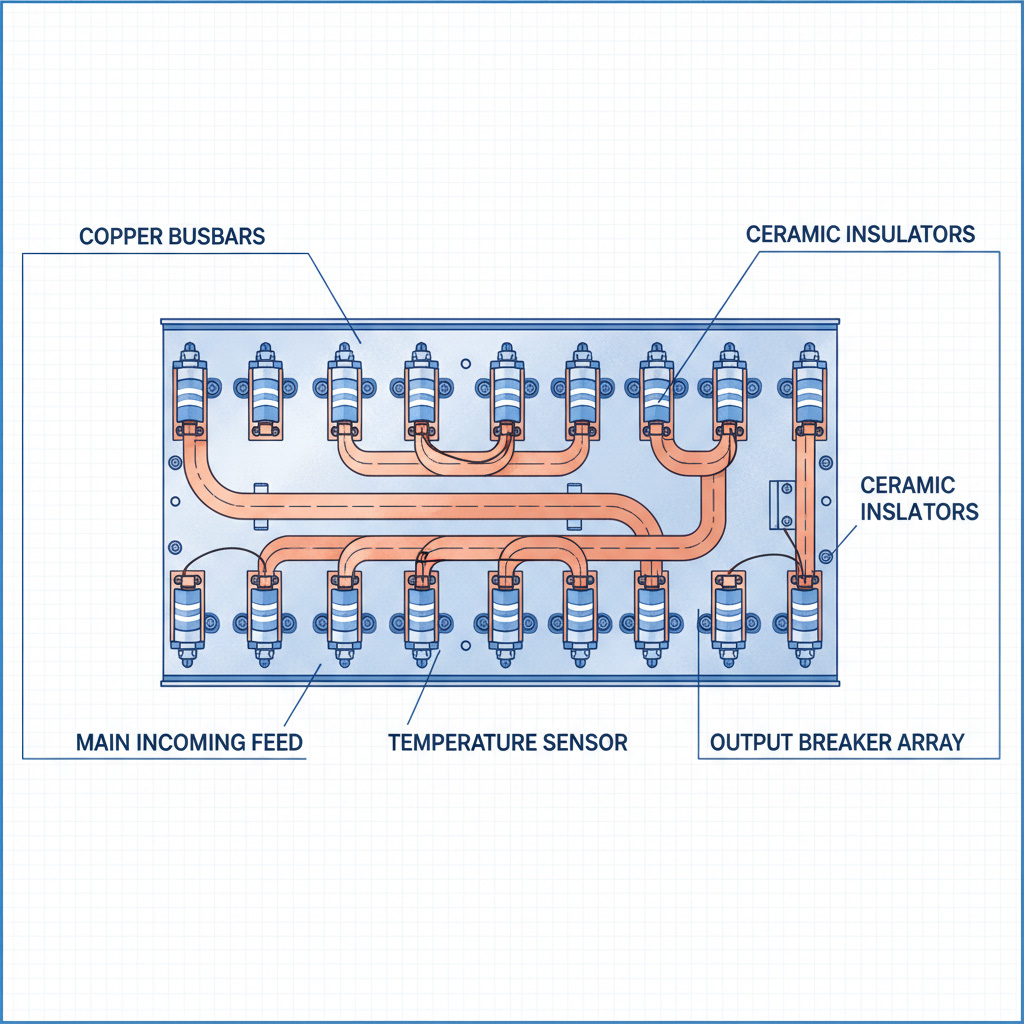
Step 6: Perform the Mechanical Stress Check. Determine the exact distance between busbar supports. Insulators prevent bending during massive fault currents. Standard spacing numbers are usually 400 millimeters. Closer spacing increases mechanical rigidity significantly. High fault currents generate massive electromagnetic repulsion forces. These forces can snap weak insulator supports instantly. We calculate peak fault current for every design. You must verify these ratings against local codes.

A complete copper vs aluminum busbar system current carrying capacity comparison helps here. Copper withstands higher thermal shocks generally. Always document your short circuit calculations for inspectors. Proper documentation proves your design is fully compliant. We provide certified test reports for our products. This makes your approval process much smoother. Electromagnetic forces scale with the square of current.

A minor fault current increase multiplies physical stress. You must select insulators rated for these specific loads. We use high-strength specialized composite insulators always. Bolt torque values are critical during assembly. Loose bolts create high resistance and dangerous heat. Follow manufacturer torque specifications without any exceptions.

How Did Real Clients Solve This?

We successfully resolved severe overheating issues for a facility by recalculating dimensions and upgrading supports.

A steel manufacturing plant in Vietnam contacted us recently. They faced severe space constraints in their switchgear panels. Ambient panel temperatures were reaching a dangerous 55 degrees Celsius. Standard calculations failed miserably under these harsh conditions. Main breakers tripped constantly during peak production hours. They needed an expert electrical busbar system intervention. Our ZHERUTONG engineering team took immediate action. We recalculated all environmental derating factors from scratch.

Standard sizing rules do not apply at 55 degrees. We switched them to a specific multi-bar copper configuration. We optimized the spacing between parallel bars. This improved natural convection cooling dramatically. We adjusted the insulator support distances to 400 millimeters. This ensured maximum short circuit mechanical strength. The exact current load was a continuous 2500 amperes. We selected dual 100 by 10 millimeter copper bars. The result was an immediate success.

We reduced internal panel temperature by 15 degrees safely. The plant passed rigorous local certification easily. Consulting manufacturers early prevents these costly field failures. The client originally used standard aluminum bars. This was a critical design flaw for their environment. The aluminum oxidized rapidly due to high plant humidity. Our intervention saved them from a catastrophic fire. We manufactured the custom copper system in record time. We shipped the pre-cut bars directly to their facility. Their installation time dropped by over 40 percent. This case proves the value of expert manufacturer guidance.

How To Get Expert Help Today?

Proper sizing ensures facility safety, guarantees regulatory compliance, and maximizes overall electrical system efficiency.

Stop guessing with your complex panel designs immediately. Improper sizing risks your entire industrial facility. We invite you to contact our ZHERUTONG engineering team directly. Visit our website to get professional manufacturing assistance today. We help with specific sizing calculations and custom manufacturing needs. Leave your specific project details in our contact form. We offer a free technical consultation for your next build. Let us manufacture the perfect solution for you. Partnering with us eliminates your engineering stress completely. We deliver precision products tailored to your exact specifications. Reach out now to secure your project success.

Request a Busway Quote

Send us your project requirements, drawings, or maintenance questions. Our team will provide a suitable busway solution and quotation.
Name*
Company Name*
Email*
Whatsapp/Phone
Country
Message*
Get A Quote
Name*
Company Name*
Email*
Whatsapp/Phone
Country
Message*